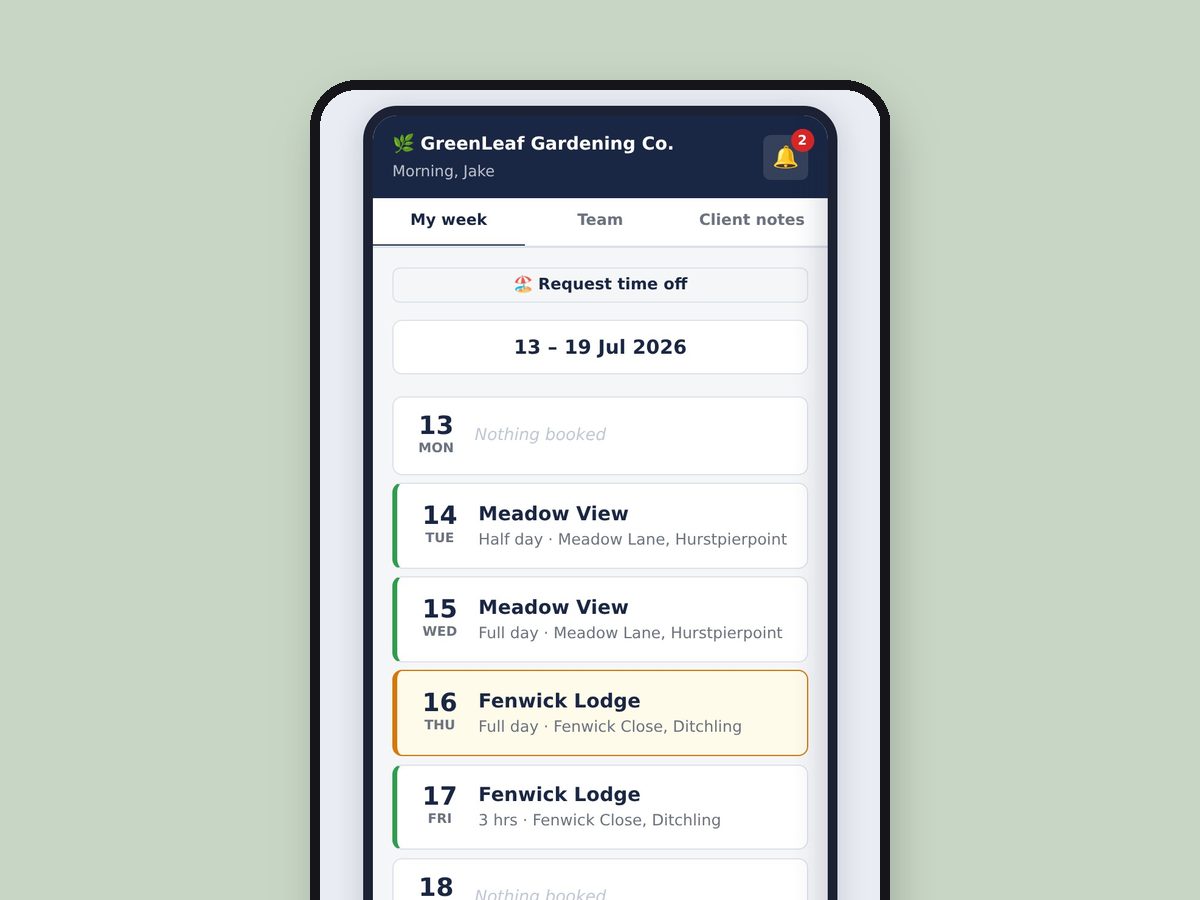
A sixteen-person gardening firm used to run its week from WhatsApp and the owner's head. Now it runs on an app I designed and built, used every working day.
 Emma Hurst
Building to discover, not just to solve
I help small businesses get clearer about who they are, reach the right people, and spend less time on admin. Everything I make is bespoke: strategy, brand, marketing, apps and systems, shaped around your business.
Who you're for, what's getting in the way, and what to do first, so you stop fixing the wrong thing.
Names, positioning and messages that land with the right people, and a marketing plan that joins up your website, search, social and email.
Apps and simpler ways of working that take the admin off your plate, built around how your business already runs. Less chasing, more time for the work that pays. And you deal with me, not a chatbot.
A sixteen-person gardening firm used to run its week from WhatsApp and the owner's head. Now it runs on an app I designed and built, used every working day.
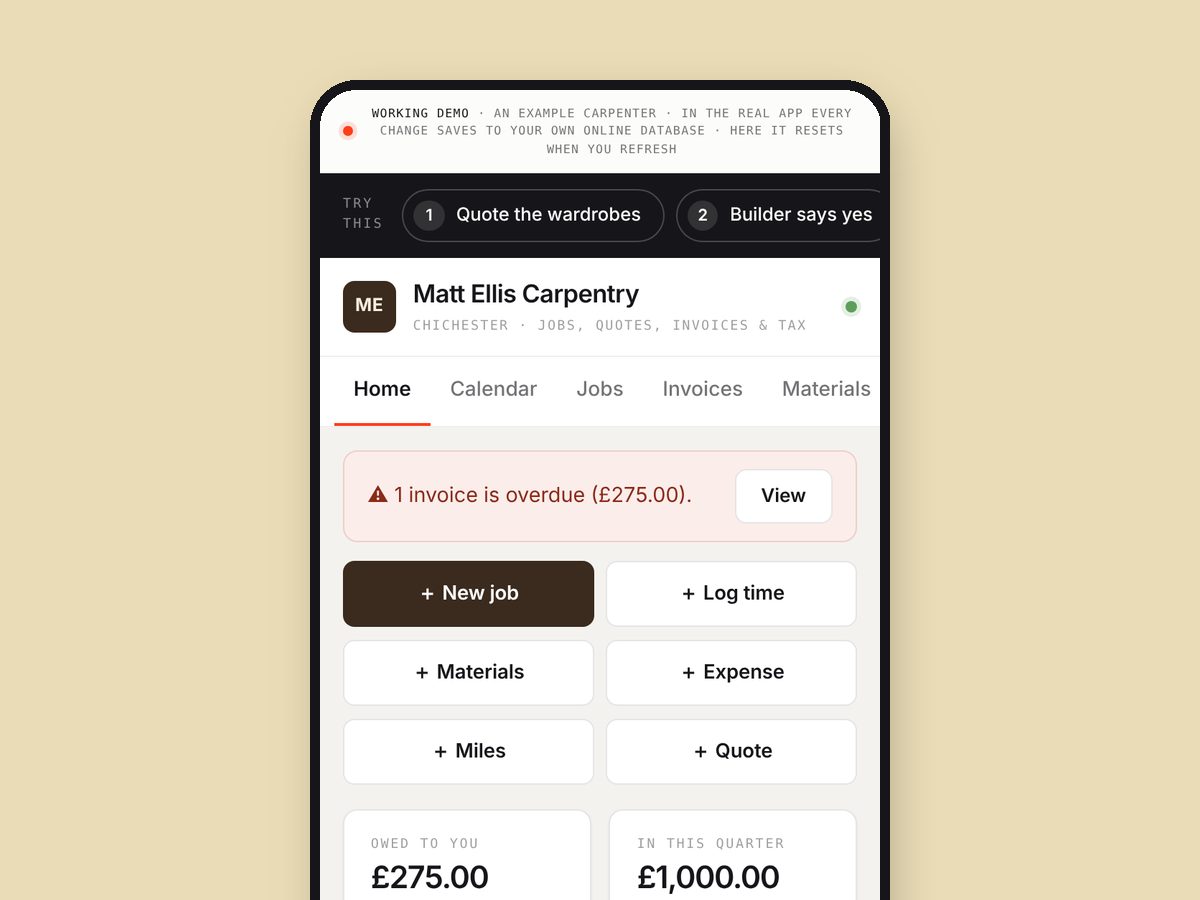
A carpenter's app for one person and a van: quotes, invoices, mileage, and the quarterly figures Making Tax Digital asks for. Being set up now.
The name, the whole brand, and the strategy and marketing plan for a new garden design business. Launching 2027.
Most owners know something's off. They're usually looking at the wrong part of it. The WhatsApp chaos is a week that lives only in one person's head. The website that isn't working is a message trying to talk to four audiences at once.
So we don't decide the answer before we understand the problem. Sometimes it's an app. Sometimes it's a name, a clearer message, or a proposal that finally says what you mean. Whatever it is, you'll be able to see it, use it and argue with it. You won't get a forty-page report and a handshake.
You know your business. I bring distance, a different way of seeing, and the patience to stay with it until something clicks.
I've run my own business since 2006, so I know where the time goes. I'm a designer by training, not an engineer. AI lets me build fast, so more of our time goes on the thinking. The tool doesn't matter. The judgement does.
I don't turn up with a diagnosis. I listen first, ask questions and stay curious until what lies beneath the presenting problem comes to the surface. That's where the work starts.
Prototypes, maps, proposals written in your words. Things we can both point at. When everyone can see the same picture, decisions stop being arguments.
Apps, brands, systems — made with you as we go, and tried out by the people who'll use them. It's done when it works for them, not when the clock runs out.
The first client asked for help with his rota. A few months later he asked me to help launch a completely different business. That second call says more about how we worked together than anything I could write here.
The problem wasn't WhatsApp. It was that the whole week lived in the owner's head, and every Sunday night he rebuilt it by hand for sixteen people.
A scheduling app, designed around how the team already worked: a rota, a phone view for every person on site, holiday and sick tracking, materials and costs, an equipment log and a monthly export to Xero.
Everyone has their day on their phone. Holidays add up by themselves. Each month's work exports straight to Xero, ready to invoice.
A good carpenter who had never gone digital. Paperwork lived in the van and his head. From April 2027, Making Tax Digital means sole traders earning over £30,000 have to keep digital records and report to HMRC every quarter.
An app on his phone, built from the gardening firm's core and set up around his week: quotes, jobs, materials, mileage, and invoices that take CIS off the labour automatically. Every quarter it lays out the figures ready to upload to HMRC-recognised software.
He doesn't have to learn bookkeeping. The records keep themselves as he works. And it proves the core travels: from a sixteen-person team to one person and a van.
A strong idea being pulled in several directions: a mission, a price point, a design system and four quite different audiences, all competing for the first sentence.
The business name and the whole brand identity. An interactive strategy explorer that sets out who they're talking to and what each audience needs to hear first. The full proposal, the scope for the website and the customer journey behind it, and the marketing plan to launch it: who to reach first and what each audience needs to hear.
The founders can now make decisions against one clear picture, instead of re-arguing the message every time someone new joins the conversation.
Communication friction spread thin across branches and across buyers, sellers, landlords and tenants — easy to feel, hard to see all at once.
A private, interactive tool designed to go out ahead of a first conversation: sliders across five everyday touchpoints, nothing stored or tracked, so a director could show where things ran themselves and where they didn't — before we ever spoke.
This is how I'd rather begin with someone: with something made for them, not a generic discovery call. Included here as a sample of the approach.
West Dean's own 2026–2031 strategy commits to using AI in learning and teaching. The commitment was stated; how to do it, and who leads it, wasn't settled.
A positioning paper written in my own time, grounded in sector data, setting out the gap between student expectation and institutional provision — and a values-led way to close it without losing what makes West Dean itself.
Well received by a senior reader, who asked for it to go further. I read the room and didn't push it — included here as a sample of the thinking, not a claimed outcome.
I've been designing identities, packaging and print since 2006. The same eye goes into every app and every strategy I make now.
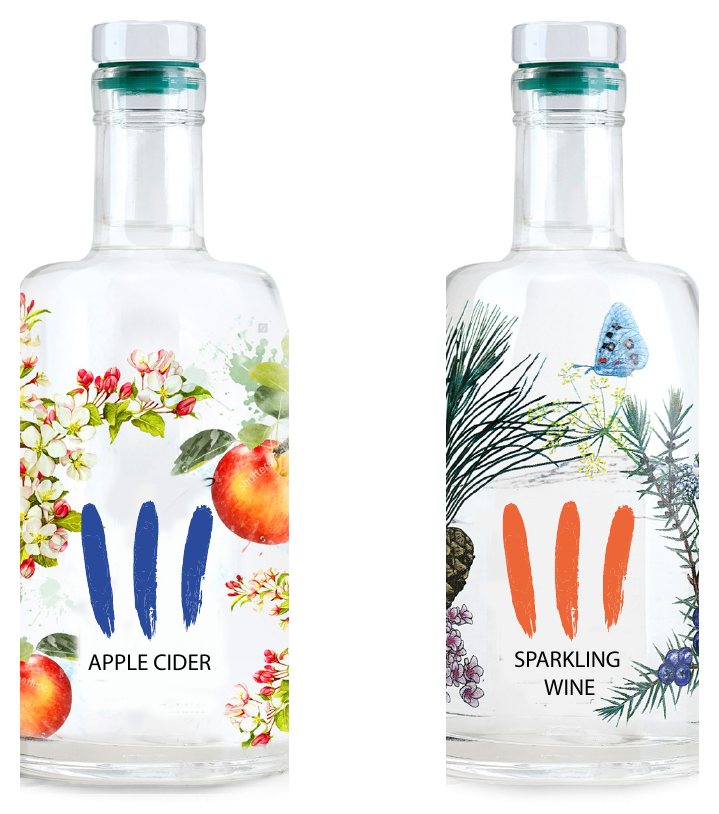



West Dean. Labels for a range of juice, cider, sparkling wine, honey, jams and chutneys.

Arundel Lawn Tennis Club. The club logo.

Arundel Lawn Tennis Club. Club hoodies.
Improv Station, West Sussex. Logo.
Dishes and Decks. Food with groove.

Cabnine. Logo and branding.
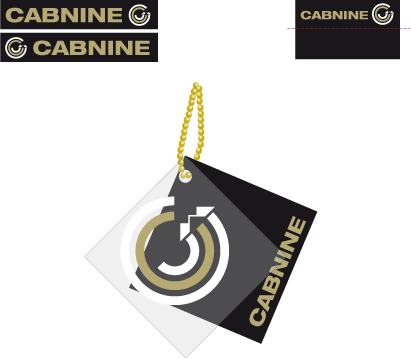
Cabnine. Labels and swing tags.

Urban Monkeys. Logo.

Urban Monkeys. T-shirt range.

Leonard Drake skin care centres. Treatment menu.
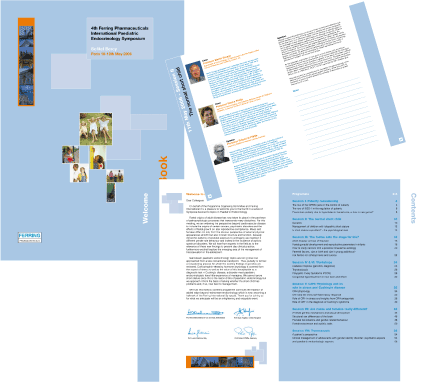
Ferring Pharmaceuticals. Symposium brochure.
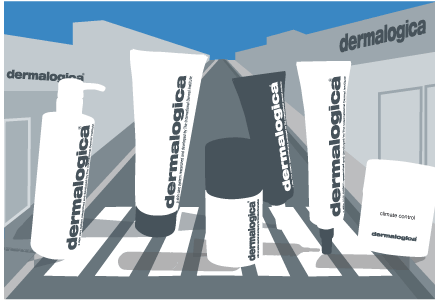
Dermalogica. Illustration.

Autosafe. Packaging.

Autosafe. Promotion.
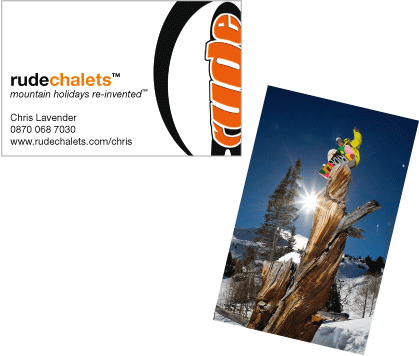
Rude Chalets. Business cards.

Kitesurf Safari. Logo.

Round Box Recruitment. Logo.

Wind Venture. Spot guide and DVD cover.
Your own app next to the subscriptions, worked out for a team your size, including what happens to your information if you stop paying. It answers the question before the owner has to ask it.
Guided questions first, then a proposal built from what the client said, split into phases they can pick from. Nobody has to translate it.
Every app I build is bespoke, shaped around the business it's for and built on a tested core that's already in daily use. Tell me what yours is and I'll show you the closest version.
I keep looking until I can see the whole picture, not just the corner everyone's been staring at. The problem people walk in with is rarely the one that's costing them.
Once I can see it, the job is to make it clear to everyone else. That might mean a map of how the week runs, an explorer the founders can click through together, or a working prototype on the owner's phone. Then we build the thing that fixes it.
You bring the knowledge of your business. I bring a different way of seeing. We make it work together.
A conversation about how things run day to day, not a brief. I'll ask more than you expect and say less than you expect.
Usually one layer down from the one you described. I'll tell you what I think it is and why, and you can argue with me.
Something you can click, hold or put on the table: a map, an explorer, a prototype, a proposal in your words. Everyone sees the same picture.
An app, a name, a message, a site, a system. Whatever the problem needs, and nothing it doesn't.
Things change once people use them. A care plan keeps software looked after, and I'd rather hear what's not working than find out you've stopped using it.
I work with AI every day as a working partner. It takes on the legwork, such as research, first drafts and much of the build, so more of our time goes on the thinking and the decisions.
I've shaped my own staff of AI assistants, built from conversations with people I respect, people who challenge me. I set them up to push back rather than agree. A lot of my work has been argued with before it ever reaches you.
The judgement stays with people: yours about your business, mine about what I see.
You do. It sits in its own separate database, set up for your business alone, and you can export it whenever you like.
On established cloud services built for this kind of app. You don't have a server in a cupboard, and nobody's laptop needs to be switched on for it to work.
Every project is priced after a first chat, once I understand how you work. The price is fixed before we start. Each one has a clear end point. If you need more than one, they join up. And if the honest answer is that you need none of them, I'll say so on the first call.
For when you know something's off but can't put your finger on it. I listen, find the root of the problem and give you a clear picture to decide from.
Priced after a first chat · fixed before we start
For a new business, or an existing one whose message has drifted. The name, the story, who it's for, how you'll reach them, and the website that carries it.
Priced after a first chat · fixed before we start
A bespoke app for running your week, whether it's just you or a team, designed around how you work and built on a tested core that's already in daily use. One flat price, not a licence per person.
One flat price for your whole team · worked out after a first chat
A monthly fee covers hosting, backups, fixes and time for small changes. Anything bigger is quoted first.
Owners who've built something good that's started running them. Short on time rather than money. They care about who they work with, not just what it costs.
Anyone who wants a chatbot just to have one. Anyone who wants the answer before I've heard the problem. Anyone who needs it finished by Friday.
A twenty-five-minute call where you tell me what's going on. No deck. I'll say whether I can help, and if I can't, I'll usually know who can.
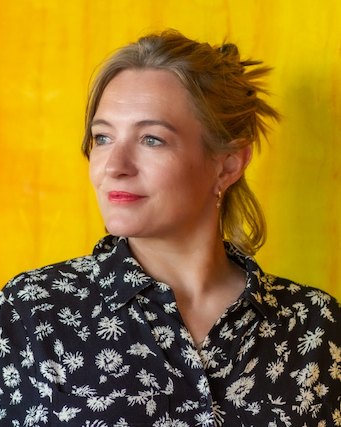
I trained in graphic design, worked on luxury brands, and have run my own business, Moozi Creative, since 2006. So I know where a small business's time goes, and how much change it can take on.
Along the way I've project-managed emerging technology with designers and founders at Goodwood's Future Lab, and shaped courses at West Dean College. Now I bring that together with AI to make strategy, brands and working software for small businesses.
AI lets me build fast, so more of our time goes on understanding your business and less on waiting for a developer. The tool doesn't matter. The judgement does.
Graphic design & illustration: where I learned clarity is a craft, not a personality trait.
Luxury brands: communicating quality to people who can tell the difference.
Moozi Creative Ltd: running a design studio, and learning what a small business can absorb.
MA Fine Art, Distinction: research, critique, and seeing a long project through.
Project manager, Future Lab: bringing emerging technology to life with designers and founders at Festival of Speed.
Short course programmer (craft), West Dean College: recruiting tutors and shaping the courses they teach.
AI for Business, Level 4, Distinction: a three-month course with TechNative and AI Potential.
Designer and builder, Moozi Creative Ltd: strategy, brands and working software for small businesses.
Running Moozi Creative Ltd taught me what a small business can absorb, where the time goes, and why the admin grows faster than the business.
That I'll have the answer on the first call. That software fixes a business that doesn't know how it wants to work. That a good name can rescue a weak idea. If I overclaim now, you'll stop trusting the parts that are true.
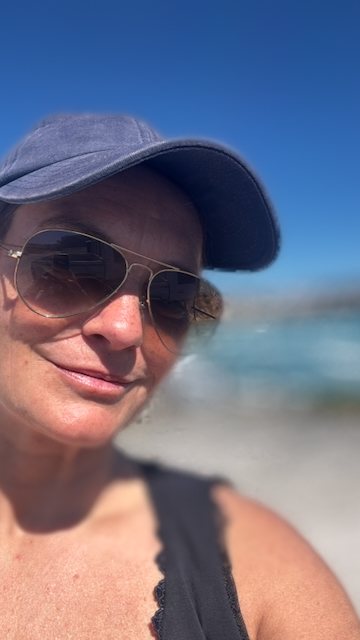
Sport, and the more extreme the better. If someone suggests something that sounds slightly unwise, I'm usually already in.
One caveat: not caving.
It's the same instinct I bring to a new client: curious, up for it, and happy to be out of my depth for a while, because that's usually where the good ideas are.
Describe it in a sentence — even a vague one. That's usually enough for me to know whether I can help.
If it's a fit, we'll have a twenty-five-minute call and I'll tell you what I see. If it isn't, I'll say so. I'd rather lose the work than sell you something that doesn't fit.
Not sure how to put it?
Last updated 10 October 2026.
This site is run by Emma Hurst, trading as Moozi Creative Ltd, Arundel, West Sussex. For anything to do with this policy, email EmmaCHurst@icloud.com.
This site uses Google Analytics to understand how it's used — which pages people read, roughly where visitors come from, and whether the site's doing its job. It works by setting a small number of cookies in your browser.
These cookies only load after you accept them in the banner shown on your first visit. Choosing "Reject" keeps Analytics off and sets no tracking cookies. You can change your mind at any time using the "Cookie settings" link that appears afterwards.
Google Analytics data is processed by Google under their own privacy policy. Only aggregated, anonymised figures are seen here — visit counts and page trends, not individual people.
Beyond analytics cookies, the only other personal data collected is what you choose to hand over:
No mailing list is run here, and nothing is shared, sold or used beyond replying to you, delivering the work you've asked for, or the analytics described above.
The site itself is hosted on Netlify. Like any web host, their servers keep standard technical logs (things like IP address and browser type) as part of running the site.
Under UK GDPR, you can ask to see what's held on you, have it corrected, or have it deleted — email to sort it. Complaints can also go to the Information Commissioner's Office.
If this policy changes, the date at the top will change with it.